
In the town I call home, most kids start getting cell phones around 5th grade. In our family, due to the thought of what goes for one, goes for the others (most of the time), our kids got theirs in … Continue reading
In the town I call home, most kids start getting cell phones around 5th grade. In our family, due to the thought of what goes for one, goes for the others (most of the time), our kids got theirs in … Continue reading

The opt-out movement is huge on Long Island. I’ve received numerous emails from friends and even strangers and have read countless posts on social media, all stating that we should “opt-out” our children from the standardized tests. Besides discussing it with a few close friends, I’ve chosen to remain relatively quiet because, drum roll please, I actually think our kids should take the test. Since the other side has been making such a concerted effort to convince people to opt out, I figure it was about time to speak up as to why my daughter sits for the state standardized tests.
First, my background- I am a NYS certified teacher and I also hold a professional teaching certification in Florida. I spent eight years teaching in what is considered a “high-stakes testing” state. My school was given a grade based on our test scores and we as teachers received bonuses if we were an “A” school. I have been out of the classroom for the past five years as I spend this time at home with my own kids but I remain extremely passionate and up-to-date on all things related to education (I even receive daily google alerts regarding any articles related to education) and volunteer my time in my daughters’ schools. My point here is I have sat at both sides of the table.
The hoopla about these tests is related to the new standards, the Common Core. Before the Common Core, each state came up with their own set of learning standards. For example, what a child was expected to know in the 2nd grade varied greatly from state to state. The idea was to come up with a set of uniform standards that all states would adopt. I don’t think many would argue with the rationale behind that idea. However, the issue became with the assessment of these new standards. Some states started assessing right away. Some states gave it three years, meaning they would begin teaching the new standards right away but hold off on testing for a few years. Others started the new standards in kindergarten and would assess when those kindergarteners were in 3rd grade. As you can see, this part got a bit tricky.
New York decided to assess right away. It was not a good call in my opinion but, like most things related to politics, money was involved as an incentive so our state signed up. We were told the students would not do well and they didn’t. There would be no penalty for the students, teachers, or schools for the first year but these scores would serve as a baseline to measure future growth. As a parent, I was OK with that. As long as there is not a negative consequence to my child for not performing well, I understand we have to start somewhere.
Now we are approaching year 4. There are still no consequences for students who do not perform well on the test. This is important to note because not all states are set up this way. In Florida, for example, if your child does not pass the yearly standardized test, they are in danger of being retained. Many states use these tests for promotion/retention decisions. We in NYS do not.
There seems to be three main reasons for opting out. There are people who believe these tests are harmful to their child, people who are taking a stand because they don’t believe in the actual standardized test and people who do not want teacher accountability to be tied to standardized tests. I’m not going to spend any time discussing teacher accountability because, for now, that piece has been removed from the equation in NYS.
First and foremost, if you believe that taking these tests will be detrimental to your child, by all means opt them out. If your child is suffering from a real, overarching anxiety about taking these tests, that’s a serious matter. Having said that, in eight years of teaching, I can only site one experience where a child had true test anxiety. Most kids get nervous and that’s OK~ it’s our jobs as parents and teachers to help them learn to manage their anxiety and nerves. I would also look to where the stress is coming from. Teachers should be working to create a “We’re not scared, we’re prepared!” vibe in the classroom. If you feel your teacher is putting undue stress regarding these tests onto students, pick up the phone and speak to them about it or speak to your principal. In addition, if your child is significantly below level and will not be able to read the passages or perform the equations, I can see why opting out would be a consideration. Before I continue, I want to state that I do believe strongly in a parents right to choose what they feel is best for their child. If you feel taking the test will hurt your child, opting out may be your best bet.
But lets assume your child does not suffer from any type of severe test anxiety and is not significantly below level. Next is the argument that these tests are pointless or invalid. I’ve heard many say, what is this test going to tell me that I don’t already know? The answer is a lot! Standardized tests are not new; they’ve actually been around since the mid-1800’s. I took them as a child and I’m guessing you did too. The reason why standardized tests are so important is because they are objective measures of student achievement. Yes, your child’s teacher knows them well and can offer more insight than one test can. I do not disagree with that point. However, insight can be subjective and often relative to your child’s classmates and even the community you live in. “Danielle is a great reader!” used to be an acceptable form of feedback for parents at teacher conferences. What exactly is a great reader? Is she a great reader compared to her classmates? Is she a great reader compared to other students her age? Does her teacher think “great” means the same as the teacher next door? Even in-class tests can be subjective, especially at the elementary level. Teachers often give a test back to a student and have them “look again”. Questions are often deemed “bonus questions” because the teacher may feel they are too hard. The students in the same grade but different classes often complete different assignment and may take different tests. All of this creates a subjective view of how the student is doing. A standardized test, that all students in the same grade, at all schools in the same state take, provides an objective measure of student progress. You will see how your child is doing compared to all the children in the entire state. This is valuable feedback to me as a parent, and should be to my school and teacher as well.
For example, I, as a parent, can see on last year’s mathematics test, in the sub-area of Number and Operations in Base Ten (what exactly that means is also spelled out), my child earned 15 out of the possible 18 points. The state average was 11. I feel pretty good about that! If I didn’t, I would know what area to ask her teacher for extra enforcement of skills. I would also know what to work at at home with her or, if she was significantly below average, I would look into a tutor. Do I take this as the end all, be all? No way. If the test told me she was below the state average and I did some digging and found that her teacher disagreed strongly and felt she just had a bad day, I would take that into consideration too. Regardless, I want to know where my child stands so that I can make informed, personal decisions pertaining to her education.
The school SHOULD be doing a lot with this information. Teachers should use the data to reflect on their teaching. Did a large portion of students struggle with vocabulary? Perhaps it’s time to re-evaluate the methodology used for teaching vocabulary in the classroom. Your child’s teacher the following year will have access to their test scores and be able to see specifically which areas they were successful in and which areas they encountered difficulty. It’s true; they will not be able to see the entire test but over 50% of the actual test is released each year. If teachers do not use the data from these tests, then yes, it is a waste of time. That would be a district/school issue that would need to be addressed.
In the end, we as parents need to do what we feel is best for our children. I only hope the decisions are based on facts and not just that the children don’t want to sit for a test. What child would? Beginning in 8th grade, Regent grades are listed on high school transcripts, as are AP exams and, of course, SAT and/or ACT scores. Tests are an integral part of education and are necessary to measure knowledge gained. I’m happy that this is sparking a dialogue about education reform and look forward to hearing other viewpoints.
Terms to Know-
45 Minute Intruder- one sleep cycle; babies seem to miraculously wake up from naps right at the 45 minute mark. This is because they are transitioning from one sleep cycle to another. They are really not ready to wake up. They will be crying; a well-rested baby should wake up happy from a nap.
Dreamfeed- The very last feeding of the day. The baby is sleeping and you stick a boob/bottle in a sleeping baby’s mouth. Do this right before you go to bed for the night but not after 11pm (that would be considered a middle of the night feeding). This “buys” you time by topping off their stomachs. Turn on minimal lights. Do not change the diaper unless you smell you need to. No talking.
Lovey– a transitional object used to help the baby fall asleep

Jules sleeping in my arms- swaddled but not wanting to be put down. Me looking very tired.
Sometime around four weeks, your little human will start to be awake more.
This is also the time when colic may begin and when you will start to see what type of baby you have. It is true- some babies are easier than others. There’s no way around it. And colic? It’s a bitch. Two of my three had it. You will be in survival mode and live on coffee, catnaps, and your baby’s smiles (even if they are far and few between). These are the things you cannot control. You will be working on the things you can.
First, you need to create a sleep haven, a delicious sleep environment. A black out shade is a must. Continue to use the sound machine and keep on swaddling your baby. When your baby outgrows the SwaddleMe swaddles, I love these because they help with transitioning out of the swaddle after 4 months. Around 3-4 months, introduce a lovey. This is our favorite. Make sure to buy at least two so you always have an extra. If you have a baby that fights sleep, these are the weapons in your arsenal.
Optimal wake time is no longer than 1 hour and will most likely be in the 30-45 minute range, at least at the start of this time period. You will probably be on a 2-3 hour feeding schedule during the day and hopefully longer at night. EASY is still in play (and will continue to be through out the first year).
During these months, your first goal is to get the baby to sleep WHEN you want her to. You are beginning to put a schedule into place so the focus is on the time. The WHERE is secondary. So yes, sometimes the baby will sleep in your arms during the day. This is not to say the WHERE isn’t important! I highly recommend putting the baby to sleep for naps in her crib righty away for naps (see newborn sleep tips) but sometimes that’s just not possible.
Around this time I became frustrated because she was only napping for 45 minutes, not the two hours I was aiming for. I googled it (what else do we do these days?) and it’s a THING! The 45 Minute Intruder, otherwise known as a big pain to new moms. So 45 minutes comes and you have two choices- run in and give the paci and run right back out OR let your baby fuss and hope she goes back to sleep. I chose the former and this happened every day for a few weeks but the…YES! We got through it and arrived in the promised land of two hour naps (we are still there at 9 months). Do not give up! Remember anything less than an hour is a “CRAP NAP” so don’t just throw up your hands and say my baby doesn’t nap. All babies need sleep to grow and develop optimally.
Right around 10 weeks, I made the transition from the co-sleeper in my room to the crib in her room. This was mainly because I kept hearing every movement and getting her up when she didn’t need to get up. This was also the time when she began sleeping through the night. By night, I mean after the dreamfeed, she would sleep until around 6. For many, 6am does not feel like wake up time but anything more than six hours is considered sleeping through the night so embrace it! By 12 weeks, I would definitely recommend making the move.
6am- Eat/Activity
7am-9am SLEEP
9am- Eat/Activity
10am-12pm- SLEEP
12pm- Eat/Activity
1pm-3pm- SLEEP
3pm- Eat/Activity
4pm- 6pm- SLEEP
6pm- Eat/Activity
This is the long stretch; try to keep the baby up for longer at this point, aiming for 8pm. This is a good time to begin a bedtime routine that includes a bath, stories and other relaxation activities
8pm- Sleep for the night
Sometime between 10pm-11pm- DREAMFEED
During these months, if your baby is still taking middle of the night feedings, always wait to see if they are just “fussing” or really crying because they’re hungry. Keep feedings all business- no lights, no talking and only diaper changes when absolutely necessary.
All days are different. Some days you’ll be lucky to get one solid 2 hour nap. As with anything in life, you need to have GOALS and that what any schedule is- a goal. It’s where you’d like them to be. Accept that it’s not always going to happen but don’t give up!
The first four months are the hardest. By putting solid sleep practices into place, you are helping both you and your baby get the sleep you both desperately need!
All advice above is solely my personal opinion based on my experience. Always consult a medical professional with any medical concerns.
It’s an exciting time. You and your baby are ready to explore the world of food together!

Most doctors recommend starting between 4-6 months. Our doctor said Jules was ready at 5 months based on how she was sitting and her cues (beginning to show interest in what I was eating and trying to grab food from my plate). Back in the day, it was very common to begin with rice cereal because it is thought to be easy to digest. Nowadays, rice cereal is falling by the way side (did anyone see yesterday’s news report? Arsenic???) and most doctors will give the green light to begin with oatmeal or vegetables. Ask what your doctor recommends at their four month check up so you can put your plan in place.
First, will you be making some or all of your baby’s food? If the answer is yes, you may want to look at baby food makers and there are certainly plenty on the market. Since I knew I would be making some but not most of her food, I didn’t want to invest in yet another gadget. I have a Vitamix (which I highly recommend because it rocks) and a steamer and that is really all you need. I picked up a few freezer containers so that when I make a batch of food, I can freeze the rest in individual containers.
You will also need soft spoons, small bowls, and a ton of bibs of you don’t have already.

I love this bowl and plate set and it’s currently on sale at Pottery Barn Kids
Next, if you’re buying foods, you’ll be starting with Stage 1. Baby foods come in stages based on the simplicity of the food, the amount it is pureed, and the size. For example, a Stage 1 food may simply be “carrots” while a Stage 2 may be “carrots, butternut squash and apples”. Stage 1 foods are typically 2 ounces while stage 2 are between 3.5-4 ounces. I did a lot of research on brands and I stick with Plum Organics and Happy Baby. Both are organic with non- GMO ingredients but what I think sets them apart is the variety of meals after stage 1 and less added ingredients. At most of my local stores, the stage 1 foods were in short supply (so annoying) so I did a big order from diapers.com and stocked up.
As per the doctor’s recommendation, we gave the same food for three days in a row to watch for allergies. We would try new foods either in the morning or around lunch time to allow for plenty of time to watch for any adverse reactions before bed.
With fruits or vegetables, you would begin by giving half the pouch and give the remaining half the next day (they are good refrigerated for 24 hours). If beginning with cereal, follow the directions on the box. If your baby is eating everything you are serving and wanting more, increase the amounts.
After we had a few foods under our belt, a typical schedule looked something like this.
7am- bottle
8am- oatmeal with fruit (we love this oatmeal that was recommended by a friend)
11am- bottle
12pm- a vegetable
You’ll then add dinner and eventually replace the afternoon bottle with a snack.
I felt strongly that I didn’t want to give her vegetables combined with fruit because I thought it would possibly turn her off to regular vegetables (I worried she would grow accustomed to the sweetness of the fruit) so I stuck with stage 1 for awhile.
Even now at 9 months, I still buy stage 1 fruits and buy only stage 2 vegetable meals, always with some type of protein.
Random Tip– Target makes these fruit pouches that we buy for the big kids which have exactly the same ingredients as the baby food pouches for a lot less $ so if you are a Target shopper, make sure to check them out
Jules did experience some constipation when we began solids, which is fairly common. Prunes and pears, as well as the probiotic oatmeal, worked wonders. We still stay away from bananas because they are so binding.
At our 8 month check up, we were given the green light for her to eat anything (with the exception of cow’s milk and honey which cannot be given until after the first birthday). Now the real fun begins!

First, my disclaimer- I am not a sleep expert by any means. However, I have had three babies who are all good sleepers and I do think it has to do with the sleep strategies I have put in place from day 1. So here is my wisdom, taken from experience and countless books and articles regarding sleep. Since it’s a lot to take in, I’m going to do it in multiple posts, broken down by months.
Terms to Know-
Items You Need-
With a brand new baby, any type of schedule is difficult to put into place. My advice for the first month is to keep EASY in mind but don’t worry if the baby won’t stay awake after eating. The Optimal Sleep Time for the first month is no more than 40 minutes, and usually a lot less. Try for stimulation but babies need A LOT of sleep so let that baby sleep! *** It is important to realize there is a difference between real sleep and comfort sleep. Let me explain. A real sleep will happen anywhere. The baby is tired and needs sleep. A comfort sleep happens when the baby is comfortable, in your arms for example. They doze because they are content. When it’s awake time and the baby is sleeping in your arms, make sure to put the baby down and see if she stays asleep. That’s how you’ll know the difference.***
During the day– When you want the baby to sleep, I recommend a light swaddle such as the Aden and Anais blankets. I use the crib from the start for at least 1 to 2 naps which I think is helpful later on. For some reason, moms can be scared to use the crib so I recommend starting during the day when you’re awake so you start to feel more comfortable.
At night, from now until around week 10– Swaddle that baby tightly using the Summer Swaddles (I tried soooooo many and these were the best). I recommend putting the baby down for the night in a flat bassinet, pack and play or co-sleeper in your room. Then when she wakes for the middle of the night feedings, keep the lights very, very dim, change her, feed her (keep talking to a minimum) and put her back to bed. Yes, even if she’s still awake. You are starting right away to teach her to fall asleep drowsy.
Notice
It is not an easy month. You will be sleep deprived. And cranky. And more in love than you thought possible (even if it’s not your first!). If you take only one thing away from this article and by far the most important sleep advice for this month- DO NOT GIVE UP ON THE SWADDLE! The Moro Reflex is a very real thing and all babies have it. You must find a swaddle that works for you and your baby to extend a deep, restful sleep for you both.
All advice above is solely my personal opinion based on my experience. Always consult a medical professional with any medical concerns.



 Exploring the rainforest
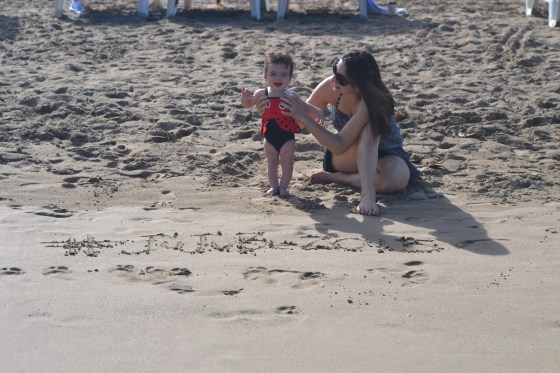
Hi everyone!
So it’s been quite awhile and in case you’ve missed it, I’m pregnant! This will be baby #3 but since my youngest is 11, it quite honestly feels like baby #1.
(This is a second marriage for both myself and my husband. He has two sons from his first marriage; I have two daughters from my first marriage)
We found out in early November and shared the happy news over the holidays. We opted not to do a gender reveal party but still wanted to share the news with our family in a fun and exciting way. We did a reveal cake and it was great!

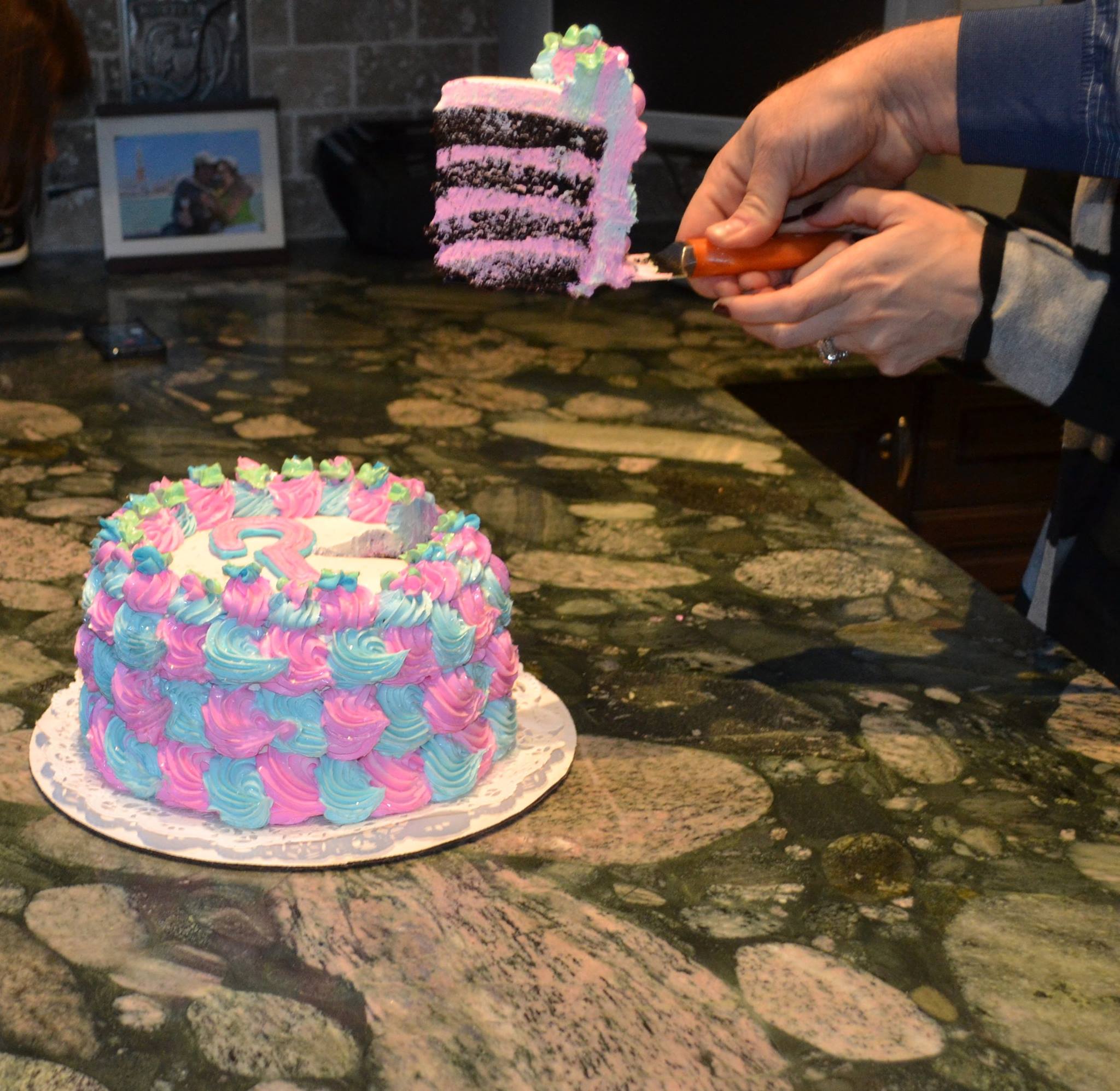
It’s a GIRL!!!!!!!!!!!!!!!
The first trimester was tough and I didn’t really start to feel better until about 15 weeks. Ginger ale (Whole Foods makes a good “natural” one), saltines, popsicles, and Preggie Pop Drops helped but honestly I was nauseous from the moment I woke up until I went to sleep at night 😦
Currently I’m 21 weeks and feeling great. I’m trying to work out 3x a week and am still doing The Bar Method. I gained a lot of weight with my last two pregnancies so I’m trying to be really conscious as to not gain as much but I’m also not stressing myself out over it. In the first trimester, all I wanted was carbs and I certainly wasn’t going to fight it.
I just bought some maternity clothes and I must say the fashion has improved greatly since I was pregnant last. I remember searching high and low for a good pair of maternity jeans and now all the great designers make a version- yay!
Here are some pics from 14 weeks and 17 weeks.


xo,
Tanya
When I first got divorced, I vowed to continue to have sit down family dinners every night. This was a staple in my home growing up and I wanted my girls to have the same great memories of sitting around the table and discussing their days, while enjoying a good, home-cooked meal. This was no easy task given I was a single mom to two young children while working full-time and tutoring most afternoons until 5pm. I would then rush to pick my little one up from pre-school and get home around 6, just in time to face the ever-stressful dinnertime dilemma. Necessity is always the mother of invention so I developed a process of meal planning that helped me considerably. Even though I now have more time on my hands, I still use this system because hey, it works!


On a Saturday or Sunday morning, I sit with my cup of coffee, my folder full of recipes I’ve torn out from magazines, my personal cookbook (more on that in a minute), and my computer so I can pull up recipes I’ve pinned on pinterest (follow me here!) and plan my meals for the week. I make a quick list- M, T, W, T, F and plan full meals (usually adding one or two desserts for the week) for each of the five days. For each meal, I list all of the ingredients I’ll need on my running grocery list which I keep on my phone.

Recently, I’ve taken this one step further by listing all the meals on this great chalkboard I found at Home Goods. I also add a quote of the week that we spend some time discussing (it works great for discussing literal meanings versus the deeper meaning most quotes have). We also do something called “high/low” where each of us talks about the high of our day and the low of our day (the lows are always interesting…I have found that here you’ll hear things that wouldn’t normally get brought up).
Now about that personal cookbook- it’s really important in my house! This blank cookbook was given to me by my grandmother when I first moved to college. She told me to fill it with the best recipes I could find and I take that task very seriously. Since I enjoy cooking and like to try new recipes, I scour recipes online, on pinterest and in magazines and try them out on my family. If the comments are “it’s ok” or “it’s good but it’s not great” we toss it. If everyone loves it, it goes into the book. The book is now filled with my family’s favorite recipes and both girls have asked numerous times about getting the book when they move out. I figure I’ll convert it into a hardcover book when the time comes and I already know how much they’ll cherish it. Find something similar here.
I usually make two to three recipes from the book that are tried and true and two to three new recipes each week. This way the girls always have a few dishes to look forward to and new dishes and foods to try.
So that’s how I do it and I have to say, dinner is one thing I don’t stress about. 15 minutes on a weekend morning and a few minutes here and there looking for recipes is all it takes to have 5 well-planned dinners throughout the week.
xo,
Tanya
Spring is here which, for me, means Easter, April Fool’s (I just love pulling pranks on my two girls, especially because they never see it coming), and my older daughter’s birthday. She’s turning 14 this year and, although the parties have changed a lot through the years, it’s still important for me to find a way to celebrate her in an age-appropriate,
fabulous way.

Here are a few of my time-tested party tips.

Everyone dressed up, even the teachers, for my daughter’s Fancy Nancy party!
Parks, beach, pool
Roller skating/ice skating
Movies
Kid-friendly restaurants (pizza places and ice cream parlors are great)
Birthday party places
Laser Tag
Skate parks

For our Spa Party, the girls were treated like VIP’s with limo service from school to the party.
*Remember to consider the time of the year. If your child has a summer birthday and you are planning an outside party, make sure it is a water party or that the children will have an opportunity to go indoors at some point.


My daughter’s cake from last year

I hope these tips help make your next birthday party planning a bit easier. Are there any tips you have learned along the way? I’d love to hear them!
xo,
TFab
 A Splendid Life